Follow Me On Social Media!

Traditional Tabbouleh Salad Recipe: The Best Fresh Twist!

Introduction to Traditional Tabbouleh Salad Recipe
In the world of Mediterranean cuisine, the traditional tabbouleh salad recipe stands out not just for its vibrant flavors but also for its rich history and cultural significance. Originating from the Levant region, tabbouleh has been a staple in Middle Eastern diets for centuries, woven into the fabric of communal meals and family gatherings. It’s more than just a salad; it embodies the essence of sharing and celebrating life’s simple pleasures.
The history behind Tabbouleh and its cultural significance
The roots of tabbouleh trace back to ancient civilizations, particularly in modern-day Lebanon and Syria, where fresh ingredients and herbs flourished. Traditionally, this dish was crafted primarily with bulgur wheat, parsley, tomatoes, and a splash of olive oil and lemon juice, making it an affordable yet nutritious option for countless families. In fact, parsley was considered a symbol of prosperity, making the salad a celebratory dish often served during festivals and weddings.
What makes tabbouleh truly special is its adaptability and how it has woven itself into various culinary traditions. While the traditional tabbouleh salad recipe primarily features parsley, many people personalize it by adding ingredients like mint or bell peppers, reflecting a cultural melting pot of influences. This salad also serves as a reminder of the importance of fresh, seasonal produce – a value deeply rooted in Mediterranean cultures.
As we dive into this recipe, you’ll appreciate not just the flavors but also the stories and traditions that make tabbouleh a beloved dish around the globe. It’s a celebration of simple ingredients – a fresh, vibrant testament to the beauty of nature presented on a plate. When you enjoy your tabbouleh, you’re partaking in a dish that has delighted palates for generations, fostering connection and joy among friends and family.
So, ready your cutting board and embrace the refreshing process of making your own traditional tabbouleh salad, where each chop of parsley tells a story, and every squeeze of lemon adds that perfect zing of heritage. Let’s get started on this culinary adventure!

Key Ingredients for Traditional Tabbouleh Salad Recipe
In crafting a traditional tabbouleh salad recipe, the ingredients truly take center stage. Each component contributes its own flair to create that beloved, refreshing taste often associated with Mediterranean cuisine.
-
Parsley: Fresh parsley is the star of this dish. Using flat-leaf parsley rather than curly adds a robust flavor and a delightful crunch. To achieve the perfect balance, chop it finely so it can mingle well with the other ingredients.
-
Bulgur: This cracked wheat ingredient is essential for a classic tabbouleh. It absorbs the flavors of the dressings and vegetables, giving the salad a hearty texture while remaining light. I recommend using fine bulgur for a tender bite.
-
Tomatoes: Ripe, juicy tomatoes add color and sweetness. Opt for vine-ripened tomatoes for the best flavor. Dice them small to make sure each spoonful is full of fresh taste.
-
Mint: Fresh mint is another key player in this salad, enhancing the dish with a cool, aromatic element. It’s incredible how the mint lifts the flavors, making each bite refreshing.
-
Lemon Juice: To really bring everything together, fresh lemon juice provides that necessary acidity. It brightens the overall flavor profile, transforming the salad into a refreshing experience.
-
Olive Oil: A drizzle of high-quality extra virgin olive oil marries the ingredients, adding richness without overpowering the salad. It’s best to use an oil that you enjoy tasting on its own.
-
Salt and Pepper: These staples enhance the natural flavors of the ingredients, so don’t forget to season to taste.
With these ingredients in hand, you’re well on your way to creating a traditional tabbouleh salad that’s both vibrant and heartening!
Why You’ll Love This Traditional Tabbouleh Salad Recipe
Focus on Freshness and Vibrant Flavors
There’s something incredibly refreshing about a traditional tabbouleh salad recipe that captures the essence of Mediterranean cuisine. Imagine the first bite of this colorful salad; it’s a burst of flavors that dances joyfully on your palate. This classic dish primarily features bulgur wheat, fresh herbs, and ripe vegetables, making it not only delightful but also nutritious.
What sets this recipe apart is its emphasis on freshness. Picture plump tomatoes, crisp cucumbers, and vibrant parsley adding layers of flavor and texture. The zesty kick from fresh lemon juice and olive oil pulls everything together, creating an uplifting experience that makes you want to savor every bite.
- Nutrient-Packed: Tabbouleh is rich in vitamins and antioxidants, making it a guilt-free indulgence.
- Versatile: This salad can work as a side or a light main dish, perfect for any meal or occasion.
- Quick to Prepare: With just a few simple steps, you can whip up this dish in no time, ideal for busy weeknights or impressing guests.
By incorporating this traditional tabbouleh salad recipe into your cooking repertoire, you’ll discover a dish that celebrates simplicity and fresh ingredients while bringing a slice of Mediterranean sunshine to your plate.
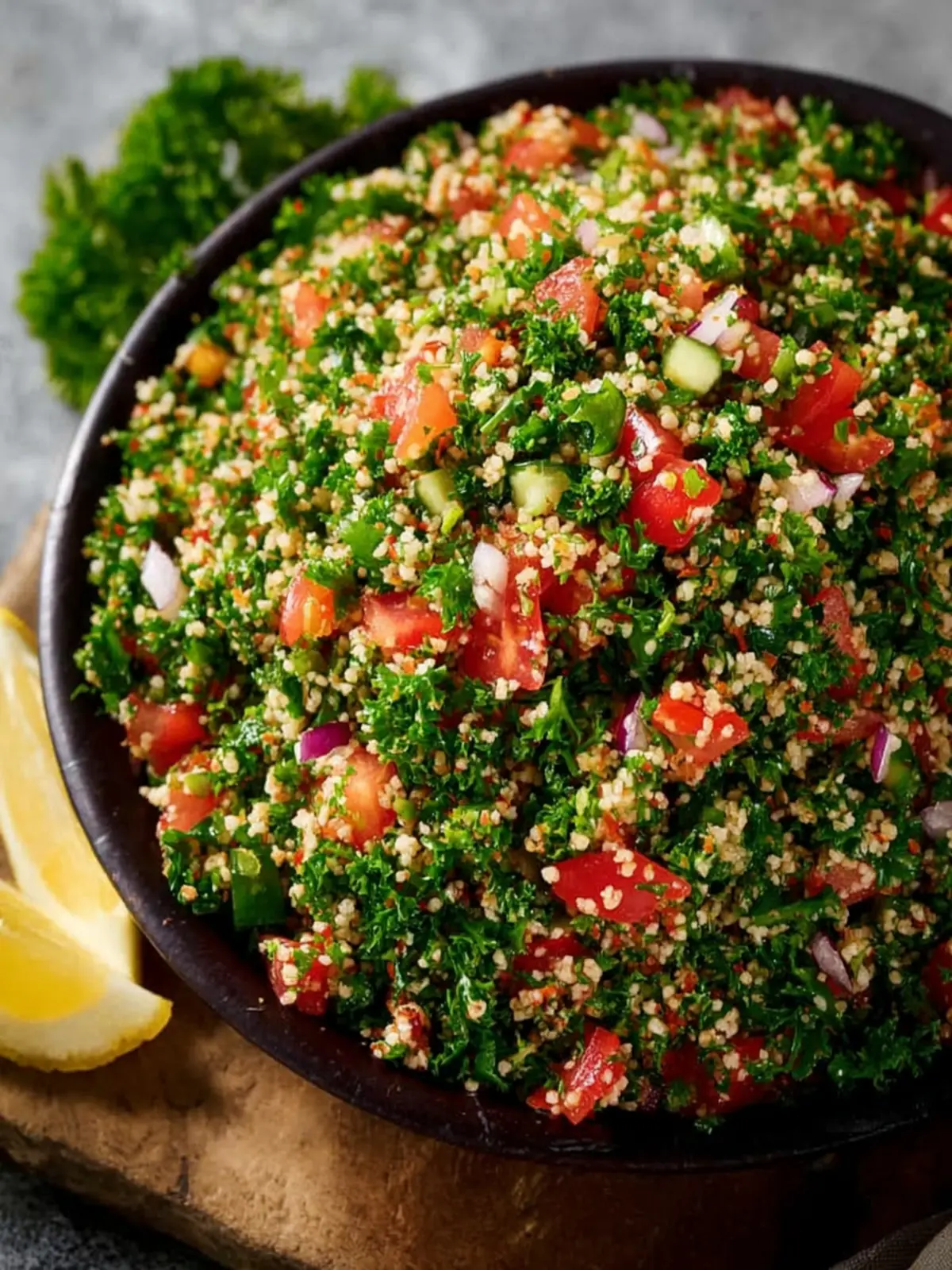
Variations of Tabbouleh
Exploring the world of traditional tabbouleh salad recipes is a delightful adventure. With so many variations to try, you can adjust this iconic dish to fit your palate or dietary preferences.
Different Grains, Herbs, and Additions You Can Try
-
Grains: While bulgur wheat is a staple in the classic tabbouleh, you can experiment with quinoa for a gluten-free version or even farro for a heartier texture. Each grain brings its unique flavor and nutritional profile, making the dish more versatile.
-
Herbs: Fresh herbs are at the heart of a great tabbouleh. While parsley is a must, consider adding mint for a refreshing twist or cilantro for a different flavor profile. Each herb changes the experience of the dish, inviting a bit of personal flair.
-
Additions: Want to make it your own? Try incorporating diced avocado for creaminess or swapping in cherry tomatoes for sweetness. You could also add nuts, such as toasted pine nuts or almonds, to give your tabbouleh an extra crunch.
By embracing these variations, you can create a traditional tabbouleh salad recipe that feels uniquely yours, transforming the dish into something special with every bite. So, get creative and make it your own!
Cooking Tips and Notes for Tabbouleh
When you dive into making a traditional tabbouleh salad recipe, you’re not just preparing a dish; you’re embracing a vibrant cultural delight that celebrates fresh ingredients. This Mediterranean staple is characterized by its refreshing flavors and health benefits, making it a favorite for many.
Essential Techniques to Perfect Your Salad
-
Choose the Right Bulgur: For that perfect traditional tabbouleh salad recipe, opting for fine bulgur is crucial. This variety absorbs water quickly, allowing it to become fluffy and tender. If you’re in a pinch, couscous is a suitable alternative, though it alters the texture slightly.
-
Chop Ingredients Finely: The secret to a rich flavor profile lies in your chopping skills. Aim for uniformity when chopping tomatoes, parsley, and mint. This not only makes for a beautiful presentation but ensures every bite is a burst of flavor. Remember to finely dice your vegetables so they mingle well with the bulgur.
-
Let It Marinate: Once combined, allow your tabbouleh to rest in the fridge for at least half an hour. This time lets the flavors meld together beautifully. It might be tempting to dig in immediately, but trust me—patience rewards you with a more harmonious taste.
-
Season to Taste: Adjustments to the salt and lemon juice can make all the difference in this salad. Taste as you go; everyone’s palate differs, and you may find you enjoy a bit more acidity or saltiness.
By incorporating these essential techniques, your traditional tabbouleh salad recipe will not only be delicious but also an impressive addition to your culinary repertoire. Enjoy the process, and let the flavors of the Mediterranean inspire you!

Serving Suggestions for Tabbouleh
Tabbouleh is not just a dish—it’s an experience that can elevate your meals in delightful, unexpected ways. This traditional tabbouleh salad recipe bursts with fresh flavors, making it a versatile addition to various dining occasions.
Ideas on how to enjoy your Tabbouleh beyond the traditional approach
-
As a Colorful Wrap Filling: Instead of your usual sandwich fillings, try using tabbouleh as the main ingredient in a whole-grain wrap. Pair it with grilled chicken or falafel for protein, and add a dollop of tzatziki for a delicious twist.
-
With Grilled Meats: This salad pairs wonderfully with grilled lamb, chicken, or fish. The freshness of the parsley and mint cuts through the richness of the meat, creating a well-balanced plate that’s visually stunning and flavorful.
-
In Stuffed Vegetables: Think outside the box—hollow out bell peppers or zucchini and fill them with tabbouleh for a vibrant, healthy dish. Bake them until the vegetables are tender, and you have a show-stopping centerpiece.
-
As a Side Dish for Soups: Tabbouleh makes for a refreshing companion to hearty soups, particularly lentil or minestrone soup. The crunch of the salad contrasts beautifully with the warm, comforting soup.
-
On a Mezze Platter: Surprise your guests by adding tabbouleh to a mezze platter alongside hummus, baba ganoush, and olives. Not only is it a feast for the eyes, but the variety pairs beautifully to stimulate conversation while dining.
With these suggestions, your traditional tabbouleh salad recipe can become a staple in your culinary repertoire, inspiring creativity and joy in your meals. Whether it’s casual weeknight dinners or impressive gatherings, tabbouleh is your trusty sidekick.
Time Breakdown for Tabbouleh Salad
Creating a traditional tabbouleh salad recipe is not only a celebration of fresh ingredients but a delightful journey in the kitchen. This dish shines brightest when each component is allowed to meld together. Here’s how to break it down time-wise:
Preparation Time
The initial prep takes about 20 minutes. You’ll need to wash, chop, and measure out all your fresh herbs and vegetables. But don’t worry; it’s quite therapeutic to chop fresh parsley and tomatoes!
Soaking Time
For the bulgur, expect around 30 minutes of soaking time. This is crucial since it allows the grains to soften and absorb the flavors of the salad, marrying the ingredients perfectly.
Total Time
In total, your adventure in making this traditional tabbouleh salad recipe will be about 50 minutes. You’ll have a refreshing dish that’s ideal for sharing with friends or enjoying on your own!
Nutritional Facts for Tabbouleh Salad
Tabbouleh salad embodies the essence of vibrant, fresh ingredients, making it not just a delicious dish but also a nutritious one. Let’s dive into its nutritional profile, uncovering the key vitamins and nutrients along with its caloric content.
Vitamins and Nutrients
This traditional tabbouleh salad recipe is rich in vitamins, especially vitamin K and vitamin C. The parsley, which is a primary ingredient, offers a burst of antioxidants and supports overall health. Moreover, the tomatoes and mint add vital nutrients while providing hydration and a refreshing flavor.
Caloric Content
A typical serving of tabbouleh salad contains approximately 150 calories. This makes it an excellent choice for those seeking a light yet satisfying meal or side dish. Packed with wholesome ingredients, it fuels your body without weighing you down, fitting perfectly into a balanced diet.
FAQs about Traditional Tabbouleh Salad Recipe
Everyone loves a refreshing traditional tabbouleh salad recipe, especially when it’s bursting with garden-fresh flavors. As you prepare to impress your family or hosting friends, you may have some questions to ensure you create the perfect dish. Let’s dive into some frequently asked questions about this delicious Middle Eastern salad.
Can I make Tabbouleh ahead of time?
Absolutely! In fact, making tabbouleh a day in advance can enhance the flavors as they meld together. Just be sure to store it in an airtight container in the refrigerator. If you prepare the salad too far ahead, consider adding the fresh herbs right before serving to maintain their vibrant appearance and flavor.
What can I serve with Tabbouleh?
Tabbouleh is incredibly versatile and pairs well with a variety of dishes. You might consider serving it alongside:
- Grilled meats, such as chicken or lamb
- Pita bread and hummus for a light meze platter
- Stuffed grape leaves for a classic Middle Eastern experience
- Roasted vegetables to complement its refreshing taste
No matter what, tabbouleh adds a bright, zesty note that can elevate any meal.
How long does Tabbouleh last in the fridge?
Generally, you can keep tabbouleh in the refrigerator for about 3 to 5 days. As it sits, the bulgur may absorb some of the moisture, so a quick stir and a splash of lemon juice before serving can help refresh it. Just remember, the fresher the ingredients, the better the salad will taste!
With these tips in mind, you’re well on your way to creating a delightful, satisfying experience with your traditional tabbouleh salad recipe.
Conclusion on Traditional Tabbouleh Salad Recipe
Crafting the traditional tabbouleh salad recipe is more than just preparing a dish; it’s about celebrating fresh ingredients and rich flavors that have stood the test of time. This vibrant salad brings a refreshing blend of parsley, tomatoes, and bulgur together, creating a burst of flavor in every bite. Remember, the quality of your ingredients matters—opt for ripe tomatoes and fresh herbs for the best results. Whether served as a side or a light main dish, tabbouleh embodies wholesome eating. Enjoy this Mediterranean classic at your next gathering, and watch as it brings people together around the table, sparking delightful conversations.
Print
Tabbouleh Salad
- Total Time: 30 minutes
- Yield: 4 servings 1x
- Diet: Vegetarian
Description
A refreshing tabbouleh salad made with parsley, mint, bulgur, and tomatoes.
Ingredients
Scale
- 2 large bunches flat-leaf Italian parsley
- 1/2 cup fresh mint leaves
- 1/2 cup fine bulgur wheat
- 3 medium firm tomatoes
- 1 bunch green onions (sliced thin)
- 1/2 cup extra virgin olive oil
- 1/2 cup fresh lemon juice
- 1/2 teaspoon ground allspice
- 1 teaspoon salt
- 1/2 teaspoon black pepper
- Romaine lettuce leaves for serving
Instructions
- Start with your bulgur wheat. Since we are using fine bulgur (#1), you do not actually need to cook it on the stove. Place the dry wheat in a small bowl and pour your lemon juice over it. Let it sit for about 20 minutes.
- Dice your tomatoes as small as you can. Once they are chopped, put them in a colander over a bowl or the sink. Sprinkle them with a tiny bit of salt. This helps draw out the excess juice.
- Let the tomatoes drain for about 10 minutes while you work on the herbs.
- Wash your parsley thoroughly and make sure it is completely dry. If the parsley is wet, it will turn into a green paste when you chop it. Remove the thick stems and gather the leaves into a tight bundle. Use a very sharp knife to slice through the bundle as finely as possible.
- Treat the mint the same way as the parsley. Pull the leaves off the stems and stack them on top of each other. Roll them up like a cigar and slice them into tiny ribbons. Chop it right before you are ready to mix the salad to keep that bright green color and fresh scent.
- In a small jar, whisk together your olive oil, allspice, salt, and pepper.
- Find your largest mixing bowl. Toss in the chopped parsley, mint, green onions, and the drained tomatoes. Add the soaked bulgur wheat (which should have absorbed all the lemon juice by now). Pour the dressing over the top. Use two large spoons to toss the salad gently.
Notes
- Chop herbs just before mixing to maintain freshness.
- You can adjust seasoning to your preference.
- Prep Time: 30 minutes
- Cook Time: 0 minutes
- Category: Salad
- Method: Mixing
- Cuisine: Middle Eastern
Nutrition
- Serving Size: 1 cup
- Calories: 180
- Sugar: 2g
- Sodium: 150mg
- Fat: 10g
- Saturated Fat: 1g
- Unsaturated Fat: 8g
- Trans Fat: 0g
- Carbohydrates: 20g
- Fiber: 5g
- Protein: 4g
- Cholesterol: 0mg