Follow Me On Social Media!
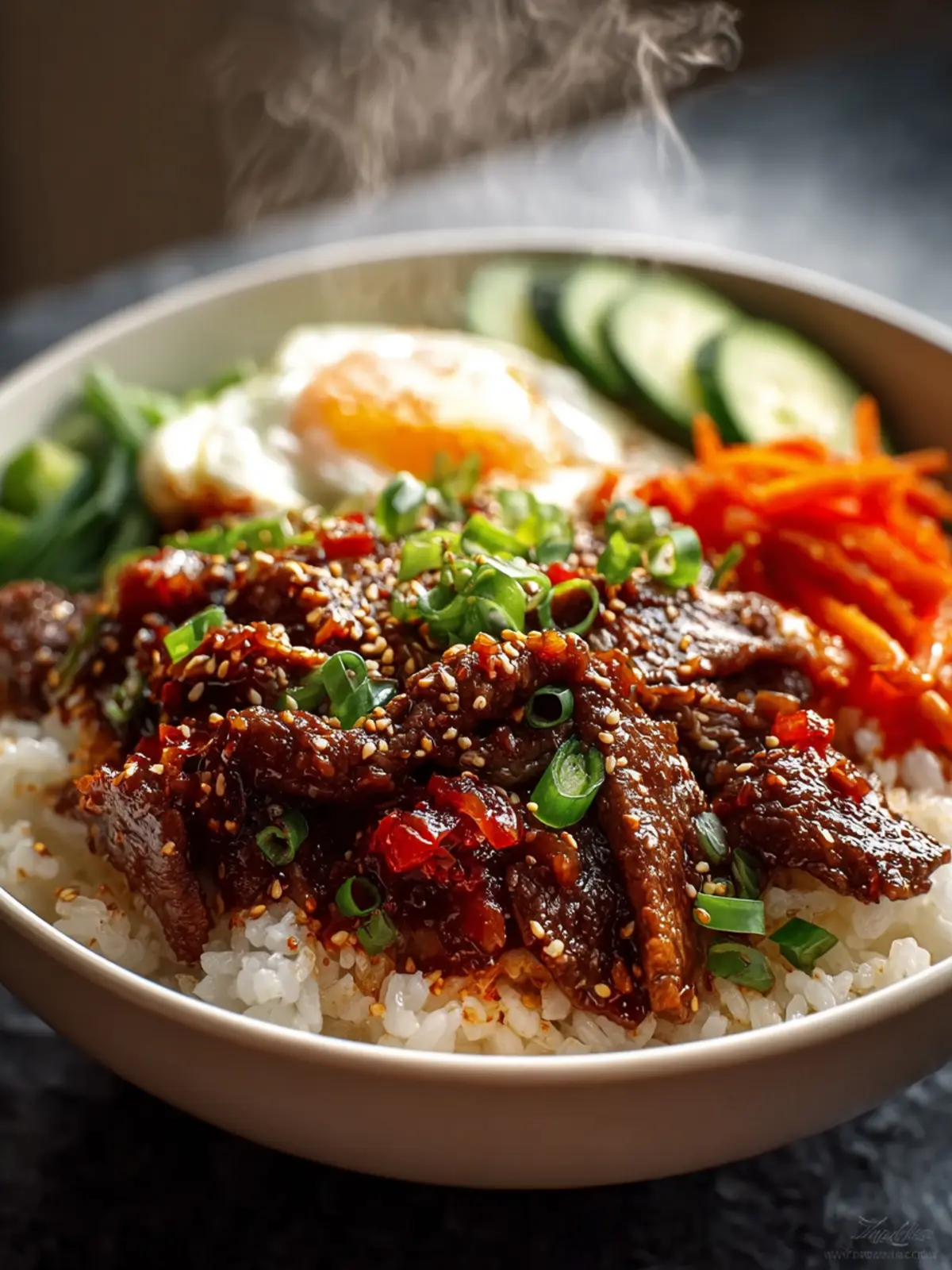
Korean Spicy Beef Rice Bowl: Irresistible Dwaeji Bulgogi Bliss

Introduction to Korean Spicy Beef Rice Bowl: Irresistible Dwaeji Bulgogi Style
Imagine diving into a steaming bowl of Korean Spicy Beef Rice Bowl, bursting with flavors that dance on your palate. This dish, known as dwaeji bulgogi, is more than just a meal; it’s a culinary journey that transports you to bustling markets and family kitchens in Korea. The rich marinated beef, combined with the perfect amount of spice and sweetness, serves as an invitation to anyone craving a hearty, satisfying dish.
The Magic of Korean Cuisine and Its Rise in Popularity
Korean cuisine has witnessed a meteoric rise in global popularity, and for good reason. With its bold flavors, emphasis on freshness, and health benefits, it captures the hearts (and appetites) of food lovers everywhere. Think about it: who can resist the allure of sizzling meats paired with vibrant vegetables and a kick of spice? The emergence of Korean BBQ restaurants worldwide and the viral success of dishes like kimchi and bibimbap have only fueled the excitement.
At the heart of many Korean dishes, including our Korean Spicy Beef Rice Bowl, is the concept of balance. By harmonizing savory, sweet, spicy, and tangy elements, Korean food creates a flavorful explosion that not only satisfies hunger but also leaves you wanting more.
Additionally, the cultural significance of food-sharing in Korea enriches the dining experience. Each bowl of dwaeji bulgogi comes with a side of connection, whether it’s sharing a meal with friends or family, or gathering around a table to partake in the joy of cooking together. It’s no wonder that so many people are drawn to Korean food; it’s not just about eating, it’s about bringing people together.
In this recipe, we’re diving deep into the art of preparing this iconic dish—a true testament to the beauty of Korean cooking. So roll up your sleeves and get ready to create your very own irresistible Korean Spicy Beef Rice Bowl!
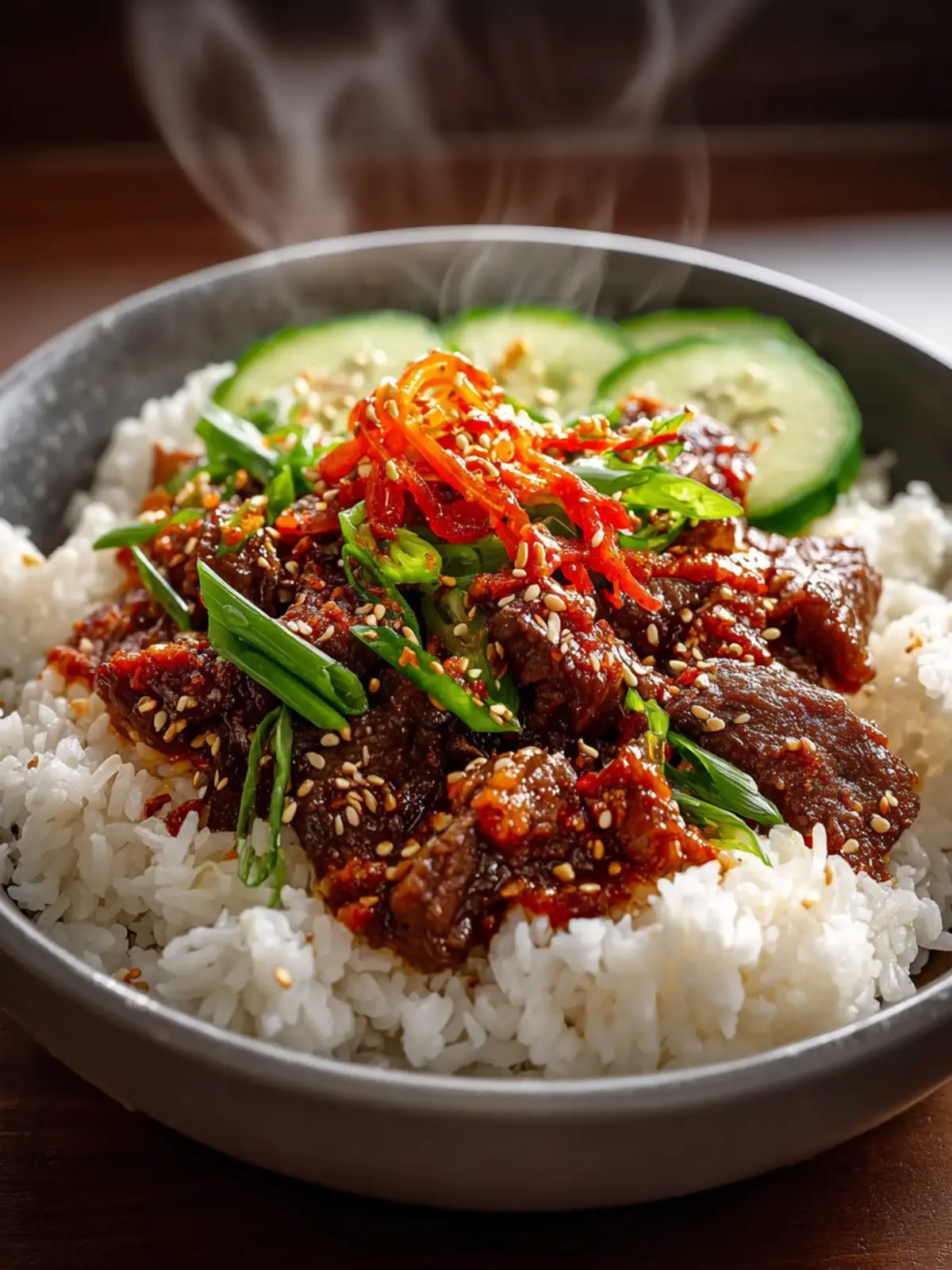
Key Ingredients for Korean Spicy Beef Rice Bowl
When you dive into the world of a Korean Spicy Beef Rice Bowl, you’re not just preparing a meal; you’re embarking on a tantalizing flavor journey. Let’s explore the essential ingredients that transform this dish into an unforgettable dining experience.
-
Beef: For the star of this recipe, thinly sliced beef is a must. I prefer ribeye for its marbling and tenderness, which helps create that melt-in-your-mouth sensation. However, flank or sirloin also works beautifully if ribeye isn’t available.
-
Gochujang: This Korean chili paste is a game-changer in flavor. Its rich umami taste provides the heat and depth that makes the Korean Spicy Beef Rice Bowl truly zing. A little goes a long way, so adjust according to your heat tolerance!
-
Soy Sauce: Using a combination of regular and low-sodium soy sauce ensures the dish is well-seasoned without being overwhelmingly salty. The depth of flavor brings everything together beautifully.
-
Sesame Oil: A drizzle of this nutty oil at the end adds a lovely aroma and enhances the overall taste profile. It’s like the finishing touch for your masterpiece.
-
Vegetables: Think vibrant and crunchy! Common additions include sliced onions, carrots, and bell peppers. They not only add color but also a delightful crunch that balances the tender beef.
-
Rice: A bowl of perfectly cooked rice serves as the comforting base of your meal. Choose short-grain rice for a sticky texture that holds up to a generous helping of spicy beef.
-
Green Onions and Sesame Seeds: These garnishes elevate the dish both visually and flavor-wise. I love the fresh burst of green onions against the bold flavors and the slight crunch of sesame seeds.
With these fundamental ingredients, your Korean Spicy Beef Rice Bowl will not only delight your taste buds but also create a warm atmosphere around your dining table. Enjoy the journey!
Why You’ll Love This Recipe
Unique flavor profile
The Korean Spicy Beef Rice Bowl, inspired by traditional Dwaeji Bulgogi, is a vibrant mix of sweet, spicy, and savory notes that tantalize your taste buds. With marinated beef that absorbs a delicious blend of garlic, ginger, and gochujang, each bite bursts with flavor. Add a touch of sesame oil to enhance the richness, and you’ve got a dish that leaves a lasting impression. This unique flavor profile will make you reach for seconds—it’s hard to resist!
Quick preparation
Busy weeknights call for fast and delicious meals, and this Korean Spicy Beef Rice Bowl comes together in just 30 minutes. The marinade can be whipped up in a flash, while the beef cooks quickly in a hot skillet. You’ll appreciate how little time you need to spend in the kitchen, allowing for more time to enjoy your meal or unwind from the day.
Perfect for meal prep
If you’re all about maximizing your week ahead, this Korean Spicy Beef Rice Bowl is perfect for meal prep. The beef can be marinated ahead of time, and you can easily portion out servings for lunch or dinner throughout the week. Pair it with rice or stir-fried veggies for a fulfilling balanced meal. It’s not just delicious; it’s practical too—what’s not to love?
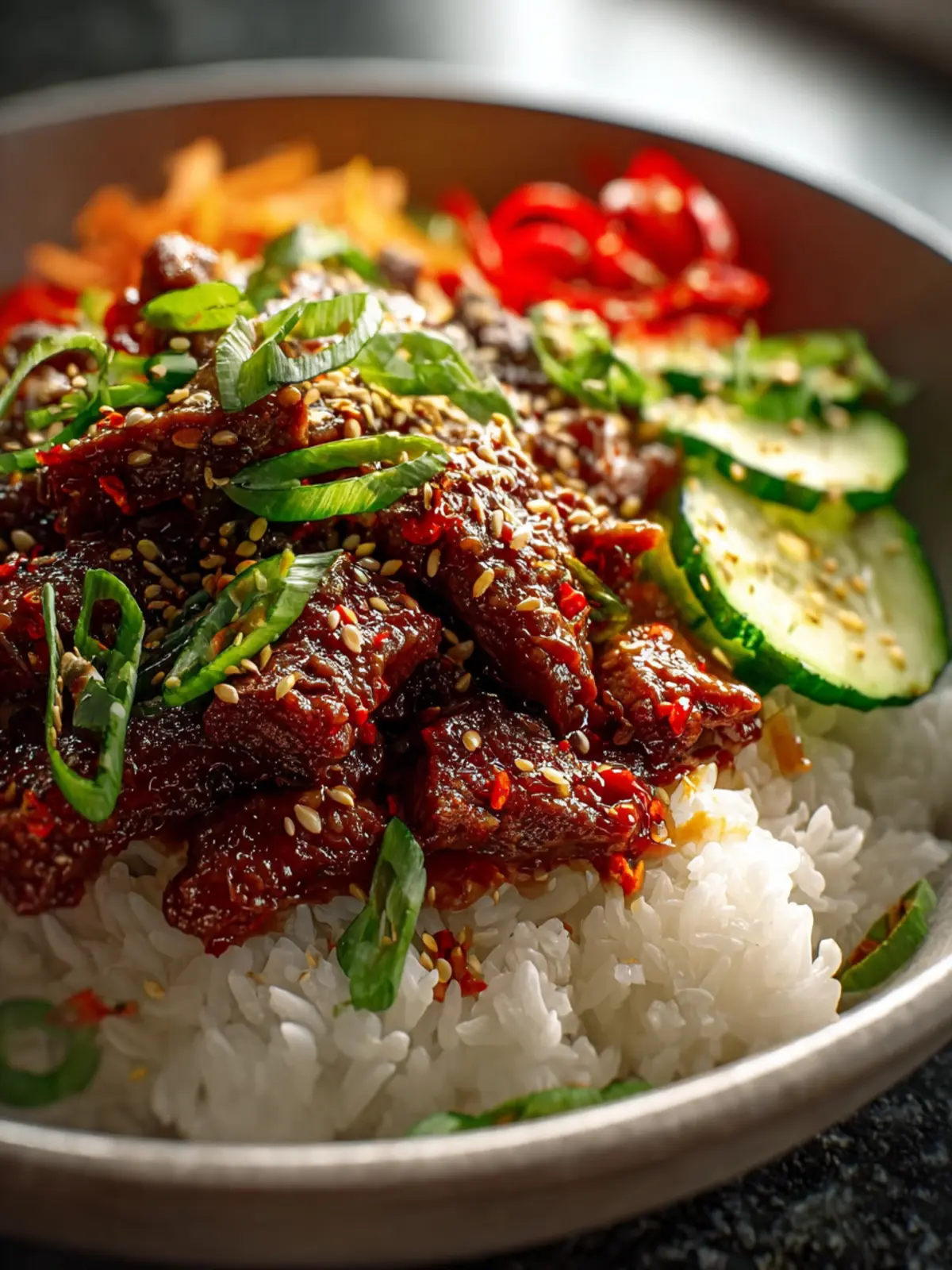
Cooking Tips and Notes
Creating a mouthwatering Korean Spicy Beef Rice Bowl is an adventure in flavor, and mastering a few key techniques can elevate your dish from good to unforgettable.
Marinating Effectively
To truly capture the essence of dwaeji bulgogi, the marinade is vital. Use a mix of soy sauce, sesame oil, sugar, and gochujang for that perfect balance of sweet and spicy. Aim to marinate your beef for at least 30 minutes, but if you have time, letting it sit overnight in the fridge allows the flavors to meld beautifully.
Stir-Frying Techniques
When it comes to stir-frying, high heat is your friend. Make sure your pan or wok is preheated before adding the marinated beef; this helps achieve a delicious caramelization. Don’t overcrowd the pan—cook in batches if necessary—to ensure even cooking and that appealing sear.
Ensuring the Perfect Beef Doneness
For that ideal texture and tenderness, cook your beef until it just turns brown, roughly 2-3 minutes per side depending on the thickness. Use thinly sliced beef, preferably flank or ribeye, as it cooks quickly and absorbs flavors better. Remember, the beef will continue to cook slightly after you remove it from the heat, so aim for a medium doneness to keep it juicy.
By following these tips, your Korean Spicy Beef Rice Bowl will not only impress but also satisfy your craving for bold and exciting flavors. Happy cooking!
Time Breakdown for Korean Spicy Beef Rice Bowl
When you delve into the delicious world of a Korean Spicy Beef Rice Bowl, the clock becomes your ally in crafting this savory delight. Each step carefully unfolds the story of flavors, from prepping ingredients to savoring the final dish. Here’s a quick look at the time commitment involved:
Preparation time
You’ll need about 15 minutes to chop vegetables, marinate the beef, and gather everything together. This part might feel like a warm-up, but it sets the stage for a mouthwatering meal!
Cooking time
The cooking process takes roughly 10 to 15 minutes. This is when the magic happens—sizzling beef, vibrant vegetables, and aromatic spices coming together in perfect harmony.
Total time
In total, you’re looking at around 30 minutes from start to finish. In no time at all, you’ll be indulging in your homemade Korean Spicy Beef Rice Bowl, proving that deliciousness can come quickly!
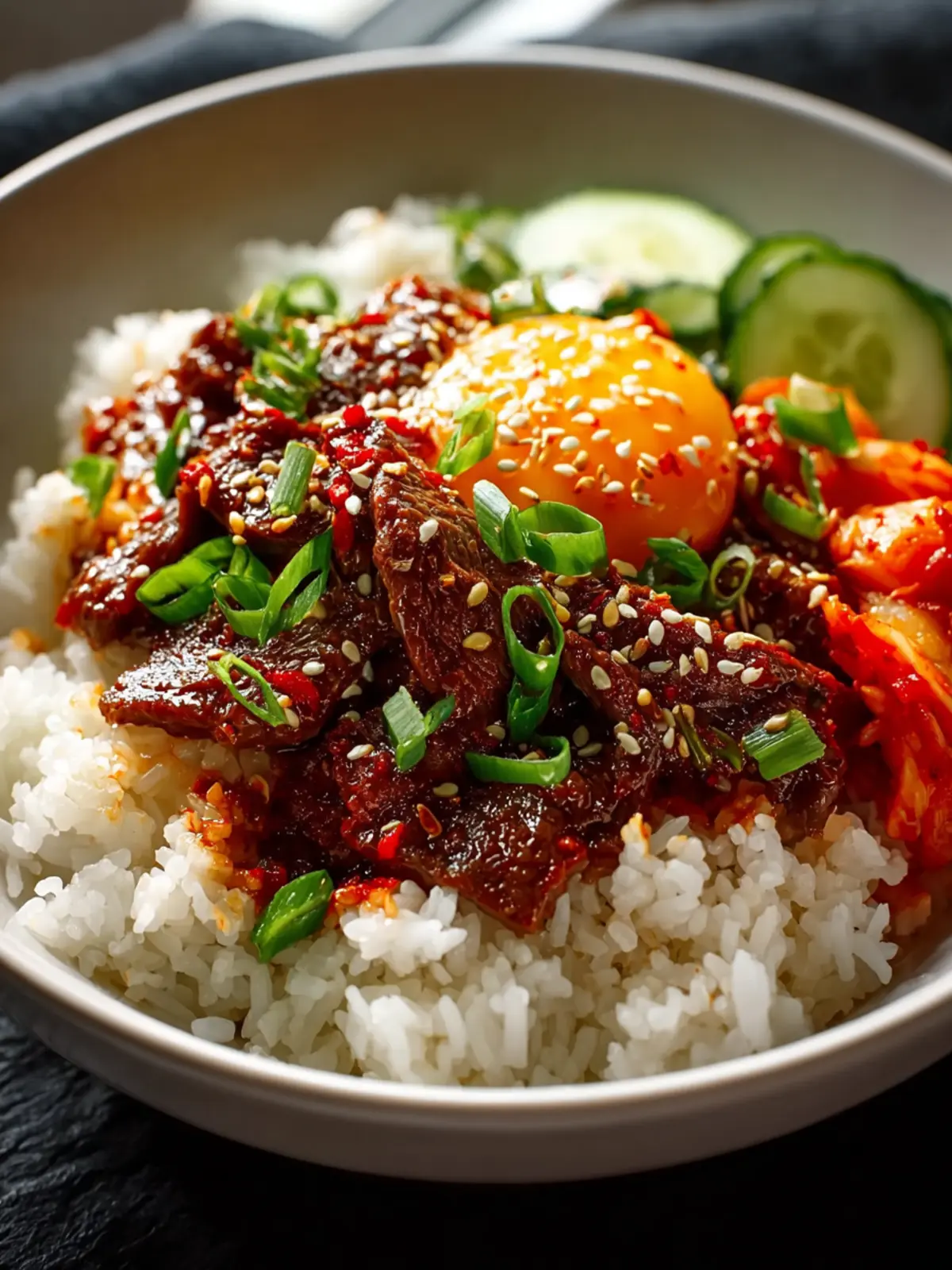
Nutritional Facts for Korean Spicy Beef Rice Bowl
When savoring a bowl of Korean Spicy Beef Rice Bowl, it’s not just the flavor that surprises you but also its nutritional profile. This dish, featuring marinated beef cooked to perfection, offers a delightful balance of taste and health.
Calories
One serving of the Korean Spicy Beef Rice Bowl contains approximately 500 calories, making it a satisfying yet manageable meal option.
Protein
Packed with protein, this dish offers about 30 grams per serving, thanks to the succulent beef. It supports muscle maintenance and keeps you feeling full longer.
Fiber
Completing the flavor and health balance, the addition of vegetables such as carrots and scallions contributes around 4 grams of fiber, aiding digestion and promoting satiety.
Enjoy your delicious and nutritious Korean Spicy Beef Rice Bowl knowing you’re treating your body well while indulging in incredible flavors!
FAQs about Korean Spicy Beef Rice Bowl
Creating the perfect Korean Spicy Beef Rice Bowl is an adventure of flavors and textures that can spark a conversation at dinner or become your go-to comfort food. Whether you’re a seasoned chef or a kitchen novice, you might have a few questions. Let’s dive into some common queries that can enhance your cooking experience!
Can I use other meats or proteins?
Absolutely! While the classic Korean Spicy Beef Rice Bowl features tender cuts of beef, you can easily switch things up. Here are some ideas:
- Pork: Dwaeji bulgogi uses pork, which gives a deliciously sweet flavor when marinated.
- Chicken: Thinly sliced chicken breast or thighs can soak up the marinade like a sponge, adding fantastic flavor.
- Tofu: For a plant-based option, marinated and grilled tofu can offer a delightful texture and absorb the spice beautifully.
How do I adjust the spice level?
Spice levels can be a personal preference, and adjusting them is quite simple:
- Milder Version: Reduce the gochujang (Korean red chili paste) or substitute it with a milder chili sauce or even plain soy sauce.
- Spicier Dish: Add more gochujang or incorporate Korean chili flakes (gochugaru) for an extra kick.
- Experiment: Tailor it to your taste by mixing in additional spices like ginger or garlic for complexity without overwhelming heat!
What are some good side dishes?
Pair your Korean Spicy Beef Rice Bowl with complementary sides to elevate your meal:
- Kimchi: This fermented staple adds crunch and tanginess, balancing the beef’s richness.
- Pickled Vegetables: Quick pickled cucumbers or radishes can offer a refreshing contrast.
- Steamed Bok Choy or Broccoli: Adding green veggies not only boosts nutrition but also enhances the plate’s visual appeal.
With these FAQs in hand, you’re set to enjoy and share your delicious Korean Spicy Beef Rice Bowl with friends and family!
Conclusion on Korean Spicy Beef Rice Bowl
In wrapping up our exploration of the Korean Spicy Beef Rice Bowl, it’s clear this dish is more than just a meal—it’s a vibrant experience bursting with flavor. The key ingredients, from tender marinated beef to crisp vegetables, create a harmony that delights the palate. Cooking this dish serves not only to satiate your hunger but also to bring a taste of Korean culture right into your kitchen. Next time you’re short on time, remember this quick and satisfying recipe that transforms simple components into an irresistible feast. Treat yourself to the spicy joy of this beloved bowl!
Print
Spicy Korean Beef Stir-Fry
- Total Time: 30 minutes
- Yield: 4 servings 1x
- Diet: Ketogenic
Description
A delicious and spicy Korean beef stir-fry made with thinly sliced beef and a flavorful marinade, served over rice.
Ingredients
Scale
- 1 lb (450g) beef (sirloin or flank steak), thinly sliced
- 3 tablespoons gochujang (Korean red chili paste)
- 1 tablespoon gochugaru (Korean red chili flakes)
- 2 tablespoons soy sauce
- 2 tablespoons sugar (brown sugar or white sugar)
- 1 tablespoon sesame oil
- 1 tablespoon rice vinegar
- 4 cloves garlic, minced
- 1-inch piece ginger, grated
- 1 tablespoon sesame seeds
- 1 small onion, thinly sliced
- 1 medium carrot, julienned
- 1 green onion, chopped (for garnish)
- 2 cups cooked white rice (jasmine or short-grain)
- 1 cup napa cabbage or lettuce leaves (optional, for serving)
- Sliced cucumbers or pickled radish (optional, for garnish)
Instructions
- In a large bowl, combine the gochujang, gochugaru, soy sauce, sugar, sesame oil, rice vinegar, minced garlic, and grated ginger. Mix well until you have a smooth marinade. This should take about 2-3 minutes.
- Add the thinly sliced beef to the marinade, ensuring each piece is well-coated. Let it marinate for at least 15 minutes at room temperature. If you’re short on time, even 5 minutes will impart some flavor, but longer is better.
- Heat a large skillet or wok over medium-high heat. Once hot, add the marinated beef, spreading it out evenly. Cook for about 5-7 minutes, stirring occasionally until the beef is browned and cooked through. Look for a nice caramelization on the edges for that delicious flavor.
- Add the thinly sliced onion and julienned carrot to the pan. Stir-fry for an additional 3-4 minutes until the vegetables are tender yet still crisp. Avoid overcooking them; you want a nice contrast in texture.
- Once everything is cooked, remove the skillet from the heat. Sprinkle sesame seeds over the beef and vegetables, and toss to combine.
- To serve, place a generous scoop of cooked white rice in a bowl. Top it with the spicy beef mixture and garnish with chopped green onions. If you’re using napa cabbage or lettuce, you can layer it underneath the beef for added crunch.
- Optionally, add sliced cucumbers or pickled radish on the side for a refreshing contrast. Enjoy immediately while everything is hot!
Notes
- The longer the beef marinates, the more flavorful it will become.
- Feel free to customize the veggies based on your preference.
- This dish can be served with kimchi for an extra kick.
- Prep Time: 15 minutes
- Cook Time: 15 minutes
- Category: Main Dish
- Method: Stir-Fry
- Cuisine: Korean
Nutrition
- Serving Size: 1 bowl
- Calories: 450
- Sugar: 10g
- Sodium: 900mg
- Fat: 22g
- Saturated Fat: 5g
- Unsaturated Fat: 15g
- Trans Fat: 0g
- Carbohydrates: 40g
- Fiber: 3g
- Protein: 25g
- Cholesterol: 70mg